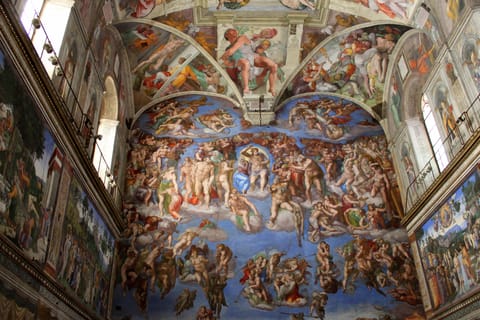
Vatican Museum & Sistine Chapel Skip-the-Line Ticket & Host
3-hour experience · Vatican Museums · Sistine Chapel · skip-the-ticket-line access · host assistance
Explore the Vatican Museums, Sistine Chapel and St. Peter’s Basilica with timed-entry tickets, skip-the-line options and guided tours. Compare what each experience includes, how long it takes, whether a guide or host is included, and which Vatican attractions you can actually enter before choosing your ticket.
3-hour experience · Vatican Museums · Sistine Chapel · skip-the-ticket-line access · host assistance
Some links are affiliate links; we may earn a commission at no extra cost to you. Vatican City Tours is an independent visitor guide and is not affiliated with, endorsed by or operated by the Vatican Museums, the Holy See or Vatican City authorities. We compare ticket and tour options by attraction access, duration, guided or self-guided format, meeting point, inclusions and traveller feedback to help you understand the differences before booking.
Compare six of the most-reviewed Vatican experiences, from straightforward Vatican Museums and Sistine Chapel entry tickets to guided tours that can also include St. Peter’s Basilica. Check the access included, tour format, duration, traveller ratings and current starting price before choosing the option that best fits your visit.
1
Most reviewed
★★★★★ 4.5 · 156,900 reviews
The simplest choice if your priority is seeing the Vatican Museums and Sistine Chapel at your own pace. Explore the papal collections, classical sculptures, Gallery of Maps, Raphael Rooms and Michelangelo’s famous Sistine Chapel frescoes without joining a guided group.
2
Popular guided tour
★★★★★ 4.3 · 84,403 reviews
A practical option for visitors who would rather have a guide connect the Vatican’s major highlights than navigate the enormous museum collection alone. The experience combines the Vatican Museums and Sistine Chapel with St. Peter’s Basilica access according to the booked itinerary.
3
Highly rated
★★★★★ 4.7 · 18,164 reviews
A stronger fit if you want expert commentary rather than entry alone. Follow a curated route through the Vatican Museums and Sistine Chapel with a guide, with selected booking options allowing you to extend the experience to St. Peter’s Basilica or the dome.
4
Independent visit
★★★★★ 4.4 · 17,991 reviews
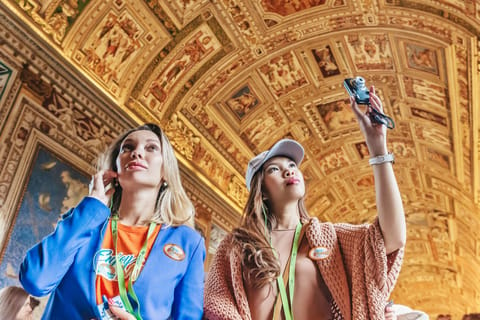
A useful alternative for independent visitors who want to spend their museum time on the collections rather than a guided itinerary. Visit the Vatican Museums and Sistine Chapel and move between highlights such as the Gallery of Maps and celebrated Renaissance artworks at your own pace.
5
Full Vatican tour
★★★★★ 4.6 · 10,695 reviews
A more comprehensive guided visit for travellers who want the art collections, Michelangelo’s Sistine Chapel and St. Peter’s Basilica explained as one connected experience. It is particularly useful if this is your first Vatican visit and you want historical context along the way.
6
Hosted entry
★★★★★ 4.2 · 8,831 reviews
A convenient choice if you prefer exploring independently but want assistance getting to the museum entrance. Meet a local host, enter the Vatican Museums and then continue through the galleries and Sistine Chapel on your own schedule.
Compare starting price, ratings, review volume, visit format and attraction access across the six Vatican experiences above. The biggest difference is whether you want simple independent entry to the Vatican Museums and Sistine Chapel or a guided visit that can also include St. Peter’s Basilica.
| Option | From | Rating | Reviews | Duration | Includes | Best for |
|---|---|---|---|---|---|---|
| Vatican Museums & Sistine Chapel Entrance Ticket Independent entry to the Vatican Museums and Sistine Chapel | €33 | 4.5 | 156,900 | 1 day | Vatican Museums + Sistine Chapel | Visitors who want the most flexible, self-paced Vatican visit without paying for a guided tour |
| Vatican Museums, Sistine Chapel & St Peter’s Basilica Tour Guided Vatican highlights with fast-track access | €61 | 4.3 | 84,403 | 2 hours | Guide + Museums + Sistine Chapel + Basilica | First-time visitors who want the Vatican’s main sights explained in one guided experience |
| Rome: Vatican Museums, Sistine Chapel & Basilica Tour Curated guided route with optional Basilica and dome upgrades | €69 | 4.7 | 18,164 | 2 hours | Guide + Museums + Sistine Chapel | Visitors who value stronger guide ratings and want optional St. Peter’s Basilica or dome add-ons |
| Vatican Museums & Sistine Chapel Skip-the-Line Entry Ticket Independent museum visit with priority-style entry | €49 | 4.4 | 17,991 | 2.5 hours | Museums + Sistine Chapel | Independent travellers who want to focus on the museum collections without following a group itinerary |
| Vatican Museums, Sistine Chapel & St. Peter’s Basilica Tour Longer guided visit covering the major Vatican landmarks | €79 | 4.6 | 10,695 | 3 hours | Guide + Museums + Sistine Chapel + Basilica | Visitors wanting a more comprehensive guided Vatican experience with additional historical context |
| Rome: Vatican Museums & Sistine Chapel Fast-track Ticket Hosted entrance followed by an independent museum visit | €36 | 4.2 | 8,831 | 1 day | Host assistance + Museums + Sistine Chapel | Visitors who want help reaching the correct entrance but prefer exploring the Vatican independently |
Four quick choices. We’ll match you with the type of Vatican experience that best fits how you want to visit.
We’ll narrow the Vatican options to the experience that best matches your visit.
Think first about how you want to visit — independently, with a guide, in a smaller group or with earlier access.
Traveller reviews repeatedly highlight the same frustrations: heavy crowds, misunderstanding what “skip-the-line” actually skips, finding the correct meeting point and arriving with the wrong clothing or ticket expectations. Check these four things before choosing your Vatican tour.
The Vatican can feel rushed even on a 2–3 hour tour
Crowds and the sheer size of the Museums can make a standard guided visit feel faster than expected
Fix: Choose the experience around how you like to visit. Pick a self-guided ticket if you want time to stop at individual artworks, or a small-group / longer tour if explanation matters more. Early-entry options can also help if avoiding the busiest periods is a priority.
“Skip-the-line” does not mean skipping every queue
Most priority tickets skip the ticket-purchase line, but security checks still apply
Fix: Leave extra time before your booked slot and do not schedule another attraction immediately afterwards. Vatican security is mandatory, and queues can still form even when your ticket includes priority or fast-track entry.
Your meeting point may not be at the Vatican entrance
Many guided and hosted tickets begin at a nearby tour office, café or designated meeting point
Fix: Open your final voucher before leaving your hotel and follow the exact address shown there. Do not simply walk to the Vatican Museums entrance — reviews show that finding the wrong office or meeting location can create unnecessary stress before a timed tour.
A valid ticket does not override Vatican entry rules
Dress requirements, security restrictions and Basilica access can still affect your visit
Fix: Cover shoulders and knees, avoid large bags and check exactly which attractions your selected option includes. Vatican Museums admission includes the Museums and Sistine Chapel, but St. Peter’s Basilica is not automatically part of every ticket or tour.
Once your ticket is chosen, these practical details can make the day much easier. They cover how the Museums work, what happens inside the Sistine Chapel and a few useful details for families, accessibility and St. Peter’s dome.
A late entry gives you less time inside, even when the ticket is described as valid for the day.
The Vatican Museums currently open Monday to Saturday from 8:00 a.m. to 8:00 p.m., with final entry at 6:00 p.m.
The last Sunday of each month follows a shorter schedule: 9:00 a.m. to 2:00 p.m., with final entry at 12:30 p.m.
If you want time for more than the headline rooms, choose your entry slot with the closing time in mind.
This is the part of the visit where your camera and conversation both need to stop.
Photography and filming are prohibited inside the Sistine Chapel, including with mobile phones.
Visitors are also asked to remain silent because the chapel is a sacred space.
Guides therefore normally explain the important frescoes before their groups enter rather than giving commentary inside.
Leaving a large bag at the Museums can become inconvenient if your visit continues elsewhere in the Vatican.
The Vatican Museums provide a free cloakroom, and larger bags, suitcases and certain other items must be deposited there.
However, the Museums specifically advise visitors continuing toward St. Peter’s Basilica not to leave baggage in the museum cloakroom.
Travel light if your itinerary continues beyond the Museums rather than finishing at the museum exit.
Food and drink are restricted in exhibition rooms, while designated refreshment areas are available.
Eating and drinking inside the exhibition halls is not permitted.
The museum route does, however, include refreshment areas with options such as cafeterias, self-service facilities, a pizzeria and vending machines.
For a longer visit, build a short break into the day instead of assuming you need to complete the entire route without stopping.
You can photograph many galleries for personal use, but there are important equipment restrictions.
Personal photography is generally permitted throughout the Vatican Museums apart from the Sistine Chapel.
Flash photography is prohibited, and tripods, camera stands, drones and telescopic selfie sticks are not allowed.
A phone or handheld camera is therefore the simplest setup for most visitors.
Strollers are welcome, and several family facilities are available along the route.
The Vatican Museums welcome families with children and permit strollers inside.
Staff can direct families toward easier routes and dedicated elevators where appropriate.
Baby-changing facilities, a nursing room and highchairs in some refreshment areas are also available.
Accessible routes and free wheelchair hire are available within the Vatican Museums.
The Museums are accessible to visitors using wheelchairs, electric wheelchairs and mobility scooters.
A limited number of wheelchairs can also be borrowed free of charge from the cloakroom with a valid identity document and deposit.
If mobility is a concern, ask staff for the appropriate accessible route rather than automatically following the standard visitor flow.
The dome has separate operating hours and its own access instructions.
For the current 2026 summer period, the dome is scheduled to open from 7:00 a.m. to 6:00 p.m., while winter hours are shorter.
Visitors booking dome access receive a QR code and instructions showing which access route to follow inside the Basilica complex.
If the dome matters to you, allow dedicated time for it rather than treating it as a quick addition at the end of the Museums.
Seeing the Pope and visiting the Vatican Museums are not the same booking.
The Papal Audience is normally held on Wednesdays when the Pope’s schedule allows, either in St. Peter’s Square or the Paul VI Hall.
Tickets for the audience are free and are requested through the Prefecture of the Papal Household.
If attending an audience is important to your trip, plan it separately rather than expecting it to be included with a Vatican Museums tour.
Treat your Vatican Museums admission as one continuous visit rather than a day-long sightseeing pass.
The official Vatican Museums ticket entitles the holder to visit the Museums and Sistine Chapel on the date for which it is issued.
Plan toilets, refreshments and the galleries you most want to see as part of the same museum visit rather than assuming you can leave for lunch and re-enter later.
This is especially useful to remember when building several Vatican activities into the same day.
The Vatican Museums are not one museum with a single collection. They are a large group of galleries, papal apartments, archaeological collections, historic rooms and chapels built up over centuries. That is why trying to “see everything” can make a first visit less rewarding.
A better Vatican visit is not about covering the most rooms — it is about knowing which collections matter to you before you start.
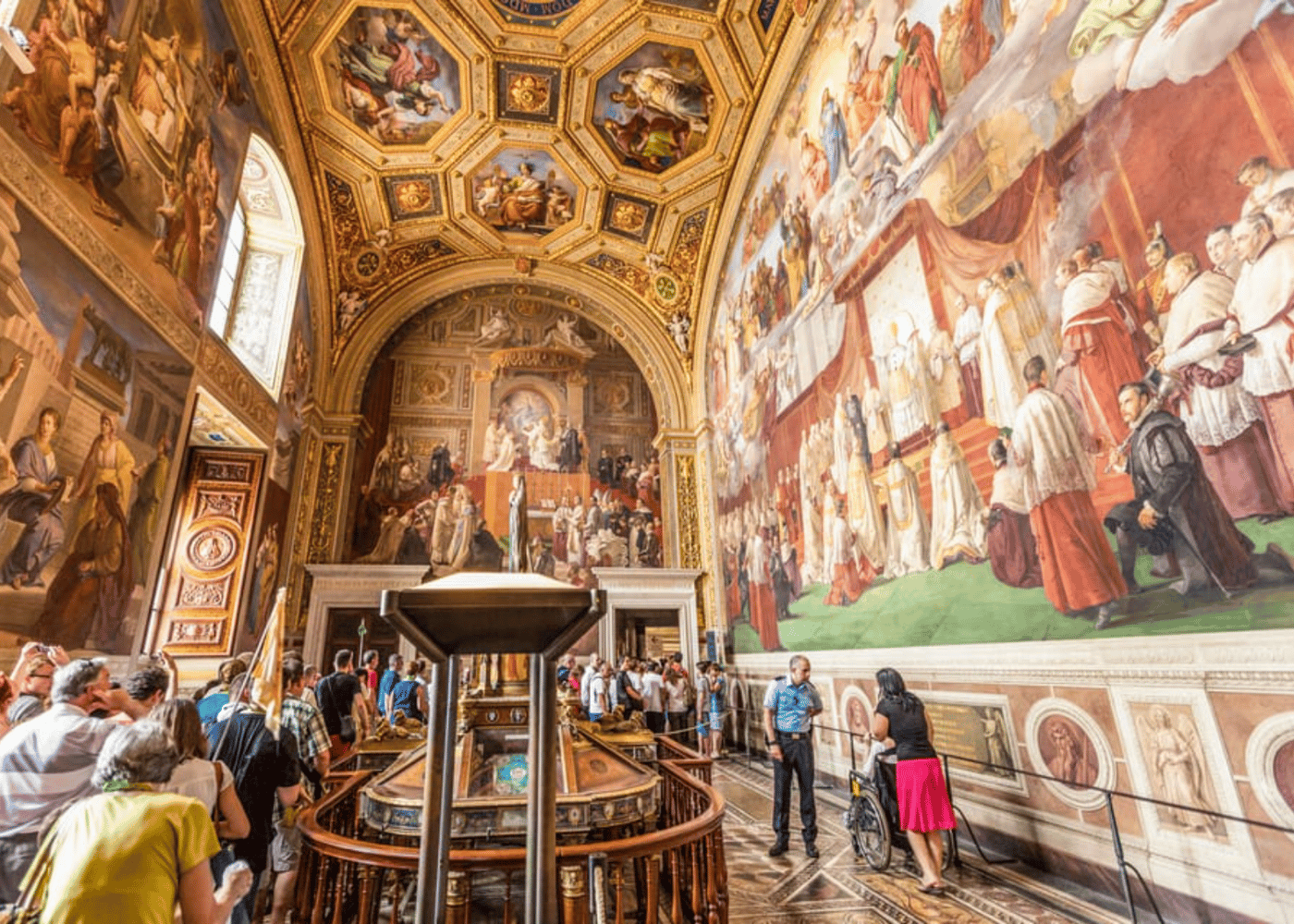
The official collection includes everything from ancient Egyptian and Etruscan objects to Greek and Roman sculpture, Renaissance frescoes, paintings and modern religious art. The Pio Clementino Museum, Gallery of the Geographical Maps, Raphael Rooms, Pinacoteca and Sistine Chapel are therefore very different experiences within the same complex.
For a first visit, this distinction matters. If Renaissance art is your priority, spending more time around Raphael and the Sistine Chapel will usually make more sense than trying to give equal attention to every archaeological collection.
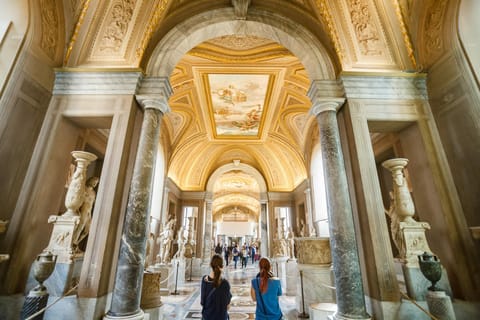
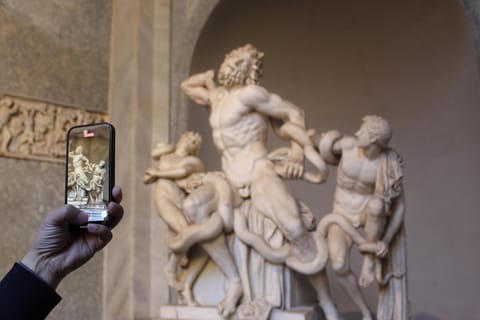
The Pio Clementino Museum is easy to treat as simply another series of galleries, but its classical sculpture helps explain why the Vatican became so important to Renaissance artists.
Greek and Roman works collected by the popes influenced generations of artists studying anatomy, movement and idealised human form. Seeing the sculpture collection before the Renaissance rooms gives useful context for the artistic world that produced Raphael and Michelangelo.
The Gallery of the Geographical Maps is one of the most visually memorable spaces in the Vatican Museums, but its value is not only decorative. The gallery stretches for about 120 metres and was created during the pontificate of Gregory XIII.
Its walls contain historical maps representing regions of Italy, while the ceiling connects geography with religious and historical events. Looking closely at the maps makes the gallery far more interesting than simply walking through it on the way to the Sistine Chapel.
The four Raphael Rooms formed part of the papal apartment chosen by Pope Julius II. Raphael and his workshop decorated them between 1508 and 1524, placing them among the Vatican’s most important Renaissance interiors.
The best-known room is the Room of the Segnatura, but it is worth viewing the rooms as an interconnected papal residence rather than stopping only for the most famous fresco. They show a different side of High Renaissance painting from Michelangelo’s work in the Sistine Chapel.
Visitors searching mainly for the Sistine Chapel sometimes give little attention to the Vatican Pinacoteca, yet it contains around 460 paintings arranged through 18 rooms.
Its collection spans centuries of Italian painting and includes works associated with artists such as Giotto, Fra Angelico, Perugino, Raphael, Leonardo, Titian, Veronese and Caravaggio.
If paintings interest you more than archaeological objects, the Pinacoteca can be a better use of your available time than trying to follow every gallery on the general museum circuit.
Michelangelo dominates the popular image of the Sistine Chapel, particularly the ceiling and the Last Judgment, but he was not the only major artist involved in its decoration.
The chapel’s wall paintings also include work commissioned under Pope Sixtus IV from artists including Botticelli, Ghirlandaio, Perugino, Cosimo Rosselli and Luca Signorelli.
That makes the chapel easier to understand as a complete Renaissance programme rather than simply a room containing one famous ceiling.
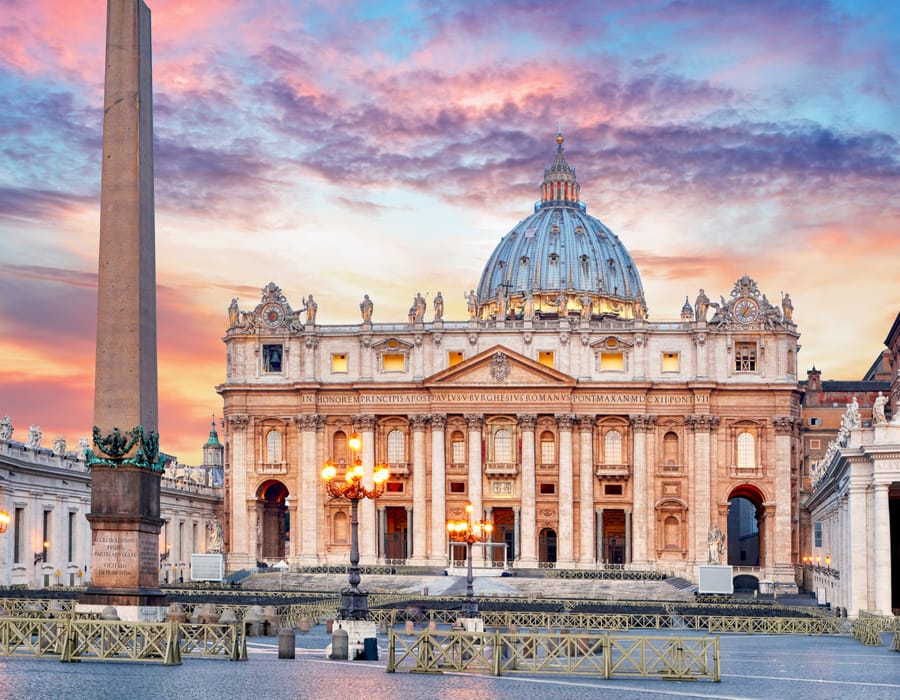
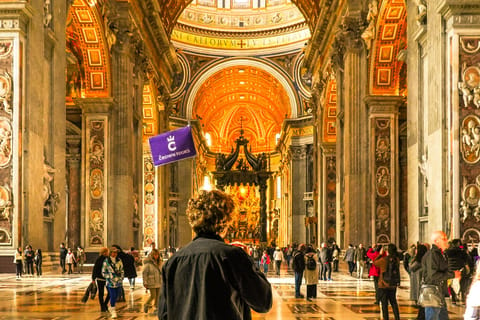
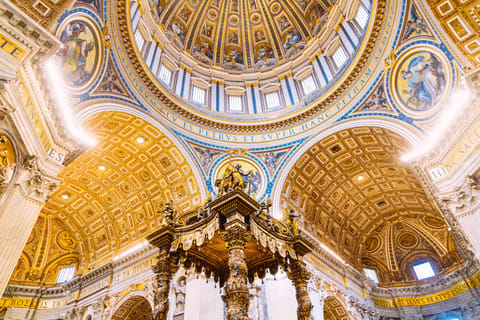
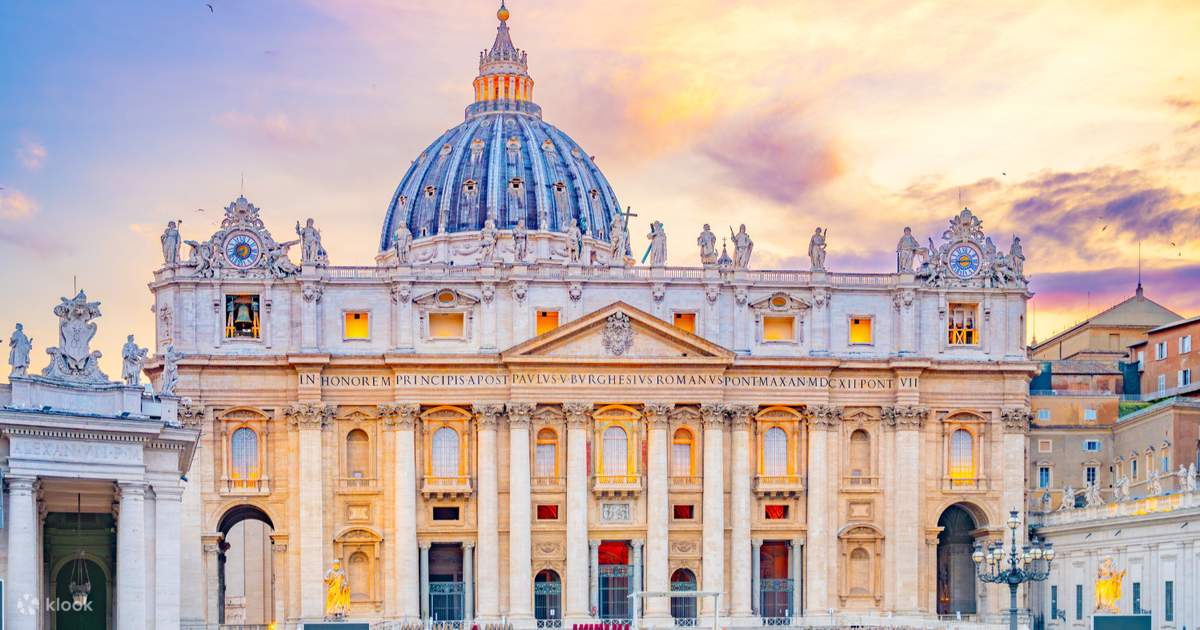
After galleries filled with collected artworks, St. Peter’s shifts the experience toward architecture on a monumental scale. Construction of the present Basilica began in 1506 and was completed in 1626, with major figures including Bramante, Raphael, Michelangelo and Bernini contributing to its development.
Michelangelo was responsible for the design of the great dome, later completed by Giacomo della Porta, while Bernini designed the monumental colonnades of St. Peter’s Square.
Seen together, the Museums, Sistine Chapel, Basilica and square show different aspects of the same story: collecting, papal patronage, Renaissance art, sacred architecture and the development of Vatican City over centuries.
There is no single route that is best for every visitor. Someone interested in Renaissance painting may prefer the Pinacoteca, Raphael Rooms and Sistine Chapel, while a visitor interested in antiquity may get more from the Pio Clementino and other archaeological collections.
If this is your first Vatican visit, a useful core sequence is ancient sculpture, the Gallery of Maps, Raphael Rooms and Sistine Chapel, adding the Pinacoteca when paintings are a priority.
The Sistine Chapel may be the reason many people book, but the Vatican Museums become much more rewarding once you stop treating everything before it as a corridor leading to the finale.
For Renaissance art: prioritise the Raphael Rooms, Pinacoteca and Sistine Chapel. For ancient history: spend more time in the archaeological collections and Pio Clementino Museum. For architecture: connect the museum visit with St. Peter’s Basilica, Michelangelo’s dome and Bernini’s square.
That approach gives you a Vatican itinerary built around what you actually enjoy rather than one based only on the most photographed rooms.
Yes, but only in specific situations. The Vatican Museums currently offer free admission on the last Sunday of the month, subject to the official opening calendar.
Children under 7 also qualify for free admission. A normal paid reservation can still be the more practical choice if you want a specific date and timed entry rather than planning around the monthly free day.
Children under 7 currently enter the Vatican Museums free of charge.
Children aged 7 to 18 qualify for the reduced admission rate. Always enter the correct age when booking because reduced-ticket eligibility can be checked at the Museums.
Yes. Individual students up to and including 25 years old can qualify for the reduced ticket.
You need documentation from your school, college or university confirming current enrolment. If you buy a reduced ticket without being eligible, the Vatican states that the reduced ticket is cancelled and a new full-price ticket must be purchased.
A tour price can include much more than basic admission: a licensed guide, smaller-group format, hosted entry, audio equipment, additional attractions or a longer curated itinerary.
Compare the inclusions rather than the headline price alone. A standard entrance ticket and a three-hour guided Vatican experience are different products even when both visit the Vatican Museums and Sistine Chapel.
Yes. The Vatican Museums offer an official audio guide designed for independent visitors.
It currently includes more than 400 commentary points in 12 languages and over three hours of material. You do not need to listen to everything — you can choose the stops that match the galleries and artworks you want to understand better.
Not necessarily. If you are comfortable navigating independently and already know which collections matter to you, a standard or fast-track entrance ticket may give you more freedom.
A guided tour becomes more useful when you want historical context, help interpreting major works or a curated route through a very large museum complex.
Do not assume the Gardens are part of ordinary museum admission. Vatican Gardens experiences are offered as dedicated tours, including guided visits and an open-bus option with multilingual audio commentary.
If the Gardens are important to you, choose a product that specifically lists Vatican Gardens access rather than relying on a standard Museums and Sistine Chapel ticket.
Yes. The Vatican Museums offer family-focused experiences in addition to standard adult-oriented visits.
One official Family Tour uses an illustrated map and audio guide built around a treasure-hunt format, with children discovering museum highlights through characters, riddles and stories rather than simply following an adult audio tour.
There is no fixed ideal length because the Museums contain many separate collections. A quick highlights visit and a visit focused on paintings, archaeology and the Raphael Rooms can require very different amounts of time.
For most first-time visitors, allow several hours rather than treating the Museums as a short stop. If you enjoy art or history, you can easily spend considerably longer.
No. “Vatican Museums” is the collective name for a large group of museums, galleries, historic rooms and collections inside the Vatican.
That includes areas devoted to classical sculpture, Egyptian and Etruscan material, paintings, tapestries, maps, Renaissance rooms, modern religious art and the Sistine Chapel.
The Sistine Chapel forms part of the Vatican Museums visit rather than operating as a separate standard museum attraction with its own ordinary entrance ticket.
Your route to the Chapel therefore takes you through parts of the wider museum complex. If the Chapel is your main priority, choose a shorter highlights-style visit rather than expecting a direct standalone admission.
Choose a small-group format if easier interaction with the guide and a more personal pace matter to you.
Standard guided tours can offer stronger value and much larger review histories, while small-group options usually cost more for a more intimate experience. The better choice depends on whether you prioritise price and popularity or group size and guide interaction.